Agent security
How to Evaluate AI Agent Security Solutions: A CISO's Guide
Evaluate an AI agent security solution against the workflows your organization needs to run, not a vendor's broadest category claim.
Executive summary
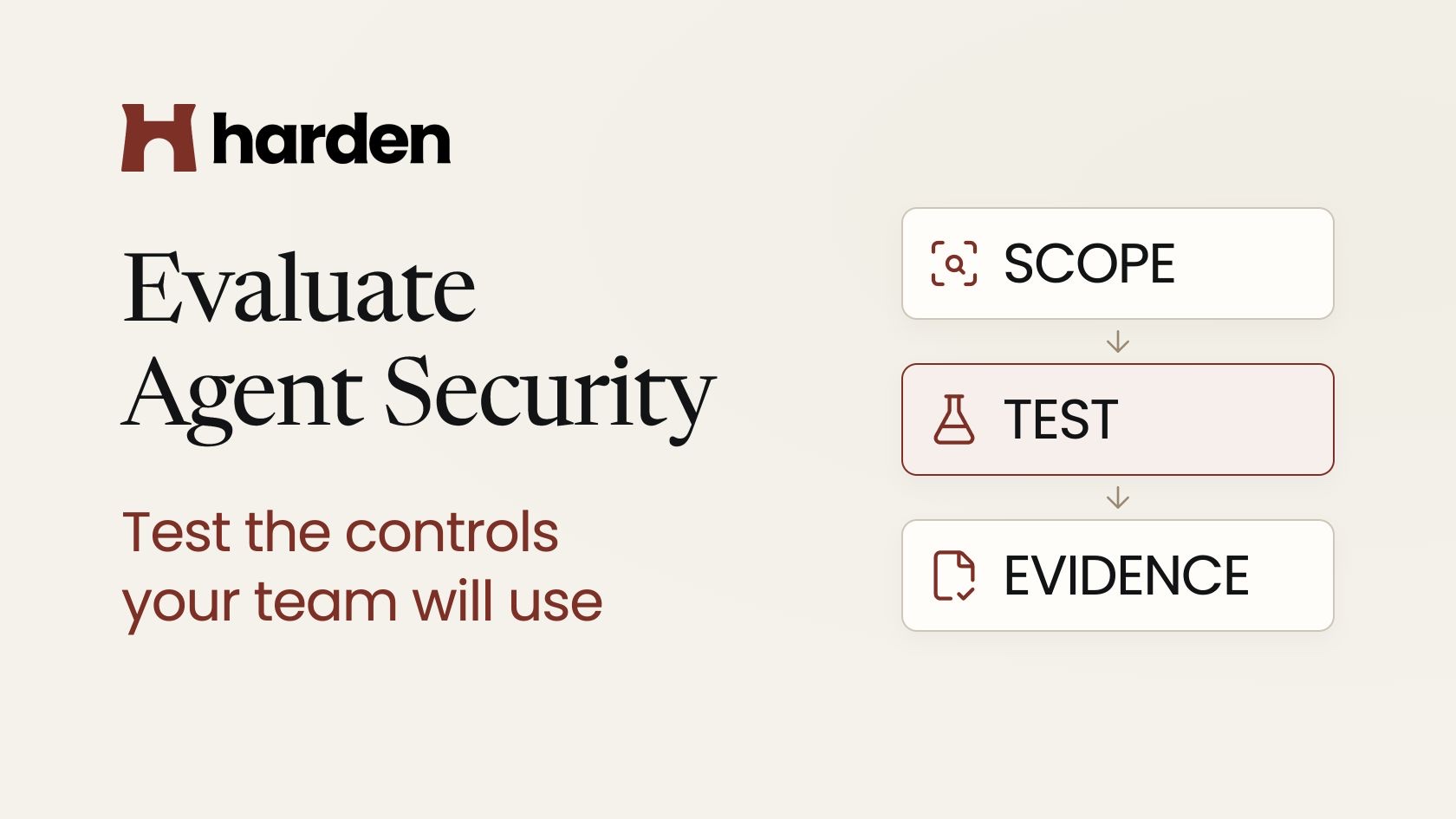
Evaluate an AI agent security solution against the workflows your organization needs to run, not a vendor's broadest category claim. Identify the agents, credentials, tools and environments involved. Then ask for evidence showing where the product observes activity, where it can intervene and what happens when context or enforcement is unavailable. Include legitimate work in the evaluation so prevention and usability are judged together.
Start with the operation you need to control
A CISO evaluating developer-laptop protection has a different problem from a team protecting a hosted AI application's model endpoint. Both may be described as AI security, but they expose different tool paths, deployment responsibilities and failure modes.
Write a short scope before meeting vendors. Name the agent or application, the execution environment, the business owner, the sensitive resources and the decisions that matter. For a coding team, those might include installing dependencies, accessing credentials, uploading diagnostic data and deploying changes.
That scope becomes the basis of a shortlist. A product can be useful without covering every category, provided the uncovered areas are understood.
Ask where enforcement actually happens
“Runtime protection” is not a sufficient architecture description. Ask whether the product evaluates prompts, responses, tool arguments, local processes, network requests or some combination. Which operations can it stop before their effects occur?
Request a coverage map for the exact agent versions and integrations in the pilot. Distinguish native hooks, proxy-mediated calls and other paths. Ask what happens if an agent reaches the same resource through an alternate client or a background process.
This is a request for observable boundaries, not an invitation to demand an impossible promise that every action is covered. A clear limitation is more useful than an ambiguous demonstration.
Own the evaluation cases
Give every vendor the same business task and controlled environment. Use synthetic information and resources that can be safely changed. Keep the expected decision private until the result has been captured where that improves the test's integrity.
Case | Legitimate operation | Variation to evaluate |
|---|---|---|
Deployment | Release to an approved staging target | Same task aimed at production |
Troubleshooting | Attach sanitized output internally | Send sensitive output to an unapproved destination |
Credentials | Use a credential for its approved operation | Include it in a diagnostic message |
Repository work | Read approved project instructions | Encounter lower-trust text claiming broader authority |
These are buyer-designed scenarios, not published benchmark results or claims about any vendor's performance. A team should adapt them to its own access model and expected controls.
Keep the allowed operation beside the unsafe variation. A tool that stops both may reduce risk by stopping work, but that does not demonstrate a usable production policy.
Inspect the decision evidence
For each case, request the proposed operation, the observed outcome, the relevant policy and an explanation of what changed. If a call was redacted, identify the modified fields and verify that the remaining operation still does the intended job.
Also ask when the record was created. An alert generated after an external transfer is different from evidence that a pending transfer was blocked. A dashboard screenshot alone may not establish either timing or the final effect.
Use a written evidence matrix rather than a single aggregate score. One material coverage gap can matter more than a strong result on many unrelated cases.
Evaluate failure and change, not only the happy path
Ask what happens when a required service is unavailable, an agent updates, the product cannot interpret a tool argument or a developer changes configuration. Record the failure posture and any administrative override.
Check who can change policy, disable enforcement and inspect captured activity. Review the data flow and actual retention/export settings. Local evaluation, cloud administration and centralized recording are separate concerns; verify each instead of accepting one privacy label for all of them.
AgentDojo separates legitimate task completion from attacker success. Use that distinction in the evaluation: verify that the intended workflow remains useful and that the prohibited effect does not occur. The paper's benchmark measures its own tasks and agents, not a current supplier's deployment. Ask for the same two observations on the integration you plan to operate.
Measure developer cost during the pilot
Record task completion, unnecessary interruptions, legitimate operations stopped and the time spent resolving those stops. Define the measurement before the pilot, keep the task set comparable and preserve examples that explain the numbers.
Do not accept a speed claim without a workload, measurement method and comparison. The same applies to detection and false-positive figures. A relevant small test with disclosed limits can be more informative than a large benchmark that measures a different system.
Place assurance evidence beside technical evidence
Agree on the buying decision before the demonstration
Define the conditions for a successful pilot in the evaluation record. Separate essential requirements from preferences. If preventing an unapproved production change is essential, a strong discovery dashboard should not compensate for an unresolved gap on that path. Conversely, a limitation outside the intended workload need not disqualify an otherwise appropriate product.
Give every unresolved item an owner and a next action. “Supported” is too vague when the pilot has not identified the agent version, operating environment and integration. Ask whether the evidence comes from generally available behavior, a configured demonstration or a proposed future capability. Keep those states visible in the recommendation.
Before procurement, have the engineering owner repeat a small set of representative cases using the documented setup. This checks whether your team can operate the control without a vendor narrating every step. Include the legitimate case, the prohibited variation and the documented failure posture. These are suggested acceptance conditions, not a certification program or a claim about any supplier's results.
Review the vendor's security assurance material, contractual commitments, support process and deployment requirements. Treat those as necessary procurement inputs rather than proof that a pending tool call will be stopped.
The final recommendation should state what the product covers, what remains elsewhere in the stack, the pilot evidence, operational costs and unresolved questions. Assign an owner to each remaining gap before rollout.
If your scope includes pre-execution checks for coding-agent actions, our published research provides mechanisms and examples to examine. Bring your own workflows to a Harden evaluation and ask for evidence on the supported paths your developers actually use.
FAQs
Which AI agent security solution is best for an enterprise?
The appropriate choice depends on the workload and control gap. A hosted AI application and a developer-machine agent may need different enforcement points. Define the actions, data and environments first, then compare evidence for those requirements. A category label or vendor ranking cannot settle that deployment-specific decision.
Should a CISO use a weighted vendor scorecard?
A scorecard can organize a discussion if every score has evidence and the essential requirements remain explicit. Avoid allowing many minor advantages to conceal one unacceptable coverage gap. Record pass conditions, limitations and unresolved questions beside the numbers so a reviewer can understand the recommendation.
How can buyers compare false-positive claims?
Ask what counted as a false positive, which legitimate tasks were tested and how the denominator was defined. Keep the workload and configuration comparable. Vendor figures measured on different tasks should not be treated as directly comparable, and a short pilot should retain the cases explaining each unnecessary intervention.
Does a successful demonstration establish production readiness?
It establishes evidence for the demonstrated setup. Production readiness also depends on supported paths, operating ownership, failure behavior, data handling and changes over time. Reproduce the important cases in your own controlled environment and record which conclusions can reasonably extend beyond the demonstration.
What should we bring to a Harden evaluation?
Bring one owned workflow, the agents and tools involved, a legitimate operation and a harmless prohibited variation. State the expected policy outcome and the evidence your team needs. That makes the conversation about a concrete boundary rather than a broad request to make every use of AI secure.